From Ornament to Open Space in Room Design
Room design balances ornament and open space in different ways. Learn to read a room’s priorities and edit its surfaces without losing useful routines or personal character.
Room design can make ornament and open space work together rather than treating one as the proper successor to the other. To read room design, look at what its occupants display, keep accessible and leave clear; those choices show how the space is meant to be used and seen.
There is no single historical sequence that applies to every home or period. A room layered with textiles, pictures and objects may express craft, memory or hospitality, while a room with clear surfaces may favour flexible use or visual quiet. These approaches can overlap, and neither is automatically more practical or more welcoming.
Read a room through its surfaces and sightlines
Choose a familiar room and observe it before moving anything. Notice which surfaces are covered, which remain clear, where the eye settles at the entrance and whether objects interrupt the routes people use.
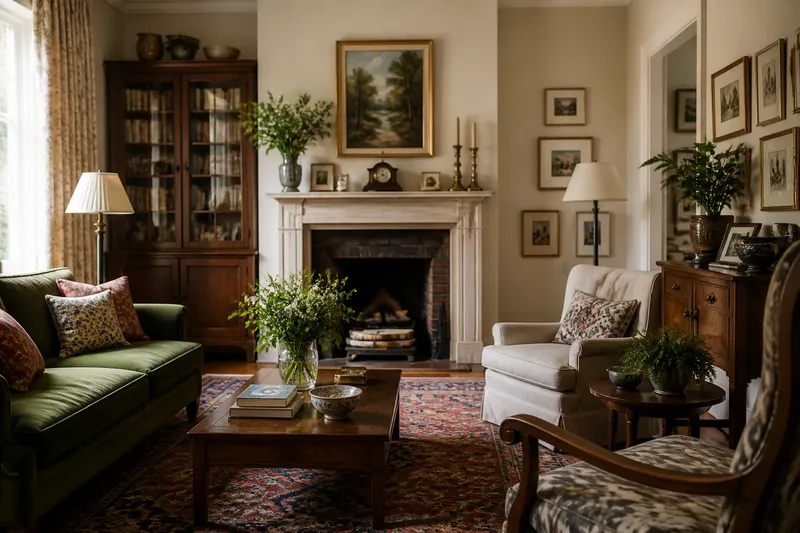
In a richly layered interior, patterned wallpaper, framed pictures, textiles and polished furniture may each draw attention. Their arrangement can make craft or household history visible. Open space also shapes the room: a clear table can support a shared meal, and an unoccupied wall can make a window or a piece of furniture easier to notice.
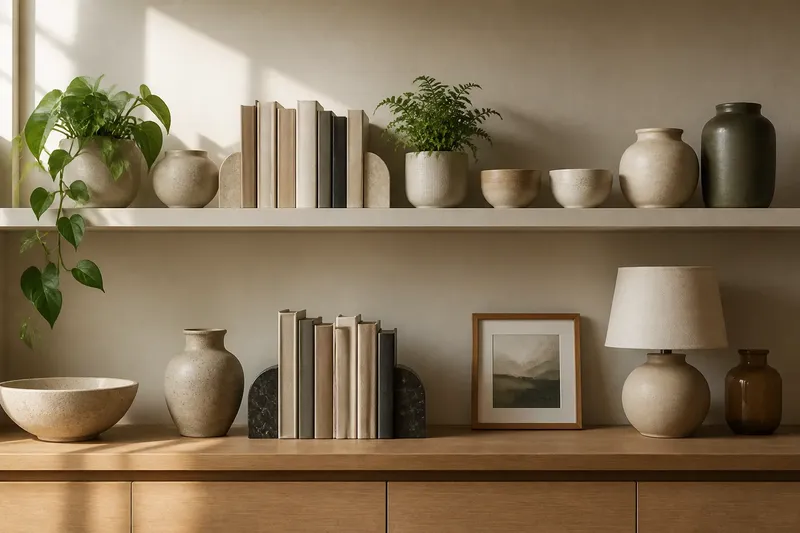
Think of clear space as the pause between items on a shelf: it helps each neighbouring object stand apart. That pause is useful only if it suits the room’s routines; a clear dining table may be practical, while a permanently empty work surface may not be.
Understand ornament and openness as different choices
Ornament is not merely excess. Carved wood, woven coverings, elaborate curtains and small collections can make skilled work, personal attachments or a sense of welcome part of a room’s visible character. The objects may also serve practical uses, such as providing warmth or storage.
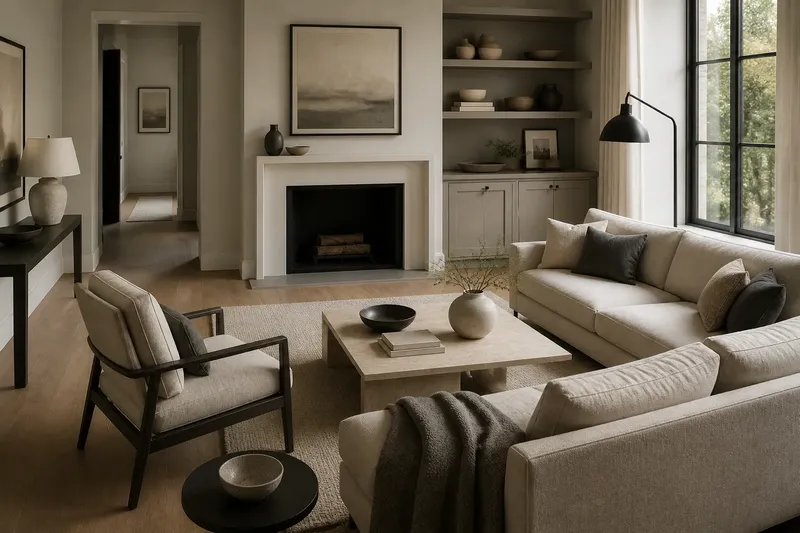
A restrained arrangement makes different qualities easier to see. A chair’s shape, a plain wall’s expanse or the proportions of a room may become more prominent when fewer objects compete for attention. Yet simplicity does not necessarily mean low cost, and a decorated room is not necessarily difficult to use.
These are ways of arranging a room, not fixed stages in a universal history. If you are describing a particular period or place, identify the evidence that supports the claim rather than presenting a broad shift as settled fact. For an individual room, ask instead what its arrangement communicates and whether that suits the people who use it.
Choose what the room should make visible
Name the room’s main activity in everyday terms: reading, eating, conversation, dressing or a mix. Then choose one feature to give emphasis, such as a fireplace, a large window, a handmade cabinet or a family photograph. This does not require removing everything else; it gives you a way to judge how each surface contributes.
Imagine a shared sitting room with a patterned rug, framed prints and souvenirs on the mantel. The occupants want the fireplace to be easier to notice but want to keep the room’s personal feel. They move a few souvenirs into a nearby cabinet, leave more of the mantel visible and keep the prints; viewed from the doorway, the fireplace now has a clearer visual outline while familiar objects remain in the room.
Make one reversible change at a time and inspect the room from both the doorway and the usual seat. If the fireplace becomes more visible but the cabinet is awkward to reach, return one souvenir to the mantel or choose a different item to move. The result should be judged against both the view and the room’s use.
Edit each surface with a clear decision
Work through shelves, tables and walls separately. For each item, consider whether it supports a routine, carries meaning, draws attention or repeats an effect already present elsewhere. An object may serve several purposes, so editing need not mean discarding it.
- Check the main route: If a chair, plant or stand makes the usual path awkward, move it to a position that leaves the route clear; if it is already out of the way, keep its current position.
- Check the chosen focal feature: If several nearby objects compete with the fireplace, window or cabinet, move one aside and view the room again; if the feature is already easy to notice, leave the display as it is.
- Check whether a collection has a shared meaning: If the objects tell a story best when grouped, keep them together; if grouping them makes a frequently used item hard to reach, separate that item or relocate the collection.
- Check how the table is used: If people need it for meals, paperwork or another regular activity, clear the working area and move display items elsewhere; if it is used mainly for display, keep the arrangement that suits that purpose.
- Check whether signs of use matter to the room: If a repaired chair or well-used basket supports a routine or carries personal meaning, retain it; if it blocks access or serves no current purpose, try it in another place before deciding whether it belongs.
- Check the view from the entrance: If several areas demand attention at once, relocate one layer and reassess; if the room feels coherent and its routes remain usable, avoid editing for the sake of emptiness.
Set undecided items aside temporarily rather than making a rushed permanent choice. If removing them makes a routine harder or strips out a meaningful part of the room, bring back the items that serve that purpose. If the room works better without them, find a suitable place to store them.
How can you tell whether open space suits the room?
Does open space mean the room should look empty?
No. Clear areas are one part of the composition, alongside objects, decoration and the routes between them. A room can feel open while still holding books, textiles and personal collections.
Should every room have one focal point?
A focal point can help, but it need not dominate every view. In a room used for several activities, separate areas may each have a modest centre of attention.
How can a simple arrangement keep its personal character?
Keep objects connected to the household and materials that suit the room’s use. Visual restraint does not require removing every trace of daily life.
What if people share the room but use it differently?
Agree on the room’s shared needs before changing displays, then preserve practical places for individual routines where possible. If one person needs a clear table and another values the objects on it, move the display to a nearby shelf rather than letting either need go unaddressed.
Let the room’s use guide its balance
Use the contrast between ornament and open space to notice what a room prioritises, not as a rule that every interior should be stripped back. A room communicates through its contents, clear surfaces and sightlines; a deliberate arrangement makes those relationships easier to understand while respecting its history and occupants.
Return to the room after it has been used normally. If a cleared surface gathers objects needed for daily life, its purpose may be practical rather than decorative; if it remains clear and helps the room feel settled, that space is doing useful visual work. The phrase room design is most helpful when it describes choices made for this particular space, rather than a universal preference for more or less ornament.